Is Buying a Grill Worth It in 2026? An Honest Answer
Short answer: yes, for most people. But the real question is what kind of grill makes sense for your situation — because "worth it" depends heavily on how you cook, how often, and what you're comparing it to.
Here's the full breakdown.
The Cost Case for Buying a Grill
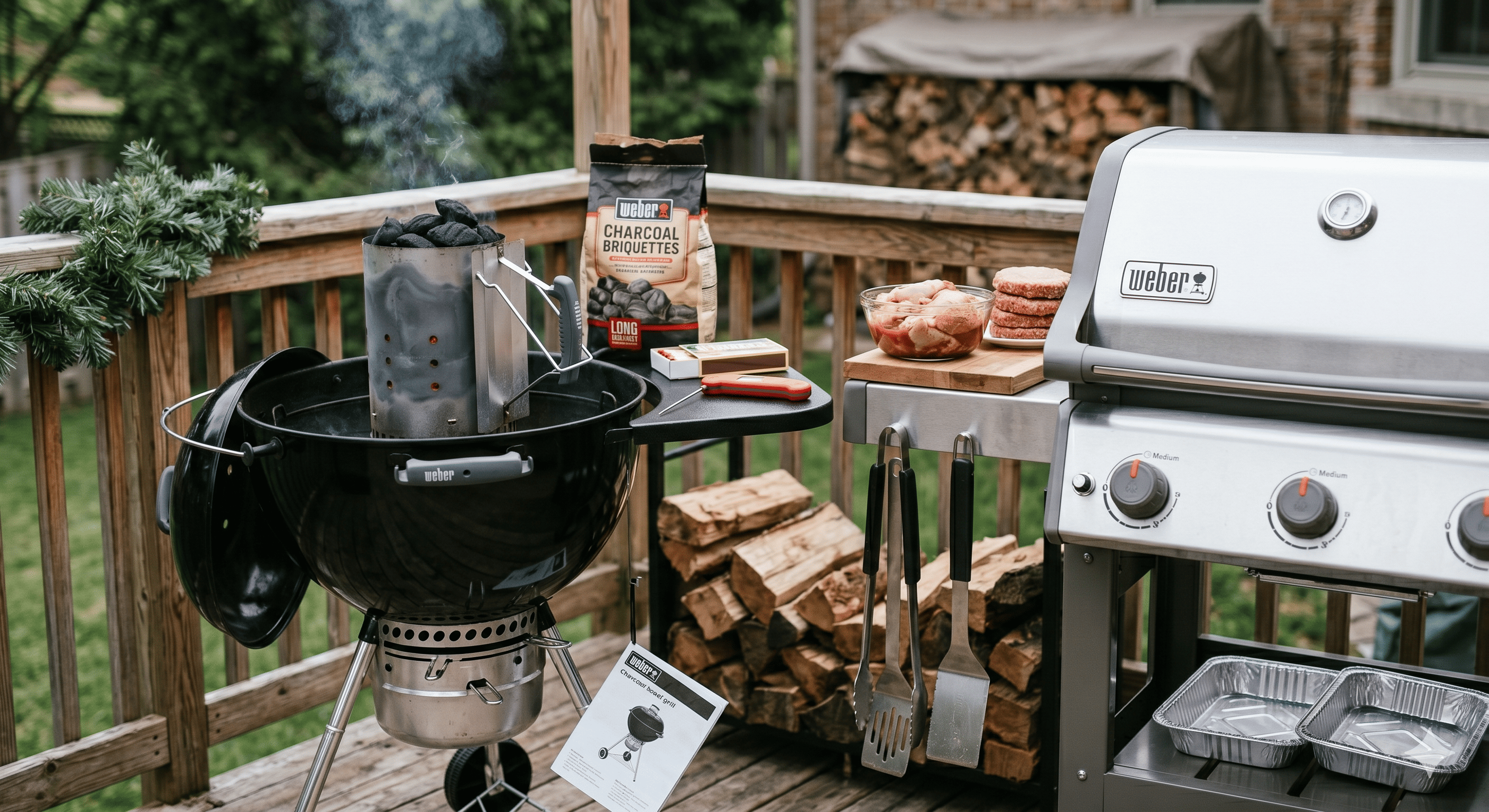
Let's start with the numbers. A quality charcoal grill — the Weber Original Kettle, which is the industry benchmark — costs around $150. It lasts 10–15 years minimum. That's roughly $10–15 per year in grill cost, before you factor in charcoal.
Charcoal runs about $15–20 per 20-pound bag. A bag covers 3–5 cooks depending on cook length. So a full summer of grilling twice a week costs you maybe $80–120 in charcoal on top of the food itself.
Compare that to ordering delivery three or four times a week at $30–50 per order, and the grill pays for itself in a matter of weeks.
Gas grills have a higher entry cost ($300–500 for a quality model) but propane is cheap and the cooking experience is faster. The math still works heavily in your favor if you use it regularly.
Who Should Definitely Buy a Grill in 2026
You cook at home regularly and enjoy it. A grill expands what you can make without dramatically adding complexity. Burgers, chicken, vegetables, fish — all of it is faster and often better on a grill than in a pan or oven.
You have outdoor space. A small patio, a backyard, even a balcony (check your building rules) is enough. You don't need a lot of room.
You host people occasionally. Even a handful of cookouts per year justifies a grill. There's a reason backyard BBQs are one of the most universally enjoyed social activities — food tastes better outside, and cooking together is inherently social.
You want to get better at cooking. Grilling teaches you fire management, timing, and reading doneness without relying on a thermostat doing the work for you. These skills transfer everywhere.
Who Might Want to Think Twice
You rarely cook at home. If you eat out most nights and only cook a few times a month, the math is harder. A grill might still make sense for occasional use, but a smaller or cheaper option is smarter than a $500 gas grill that sits covered.
You have very limited outdoor space or a lease that restricts grills. Worth checking before buying.
You're in an apartment with no outdoor space. No workaround here — you need outdoor space for a charcoal or gas grill.
What Kind of Grill Is Worth It in 2026?
Charcoal kettle ($150–$300): Best flavor, lowest entry cost, most versatile. The Weber Original Kettle and Weber Kettle Premium remain the best value in this category. Built to last over a decade. If you want the full comparison between the two, read our Weber Original Kettle vs. Kettle Premium guide.
Gas grill ($300–$600): Best convenience. Heats up in 10 minutes, easy temperature control, great for weeknight cooking. Weber Spirit II and Napoleon Freestyle are both strong in this range.
Pellet grill ($400–$800): Best for set-it-and-forget-it cooking. Maintains temperature automatically. Worth it if you do longer cooks — ribs, brisket, whole chicken — and value being present with guests rather than babysitting the grill.
Budget grills (under $100): Fine for occasional use, but thinner materials mean a shorter lifespan and worse temperature control. Worth it as a starter if you're not sure you'll use it much, but don't expect it to last.
The Bottom Line
In 2026, buying a grill is worth it for almost anyone who cooks at home and has outdoor space. The math favors it quickly over the cost of delivery or eating out, the food quality is genuinely better, and the experience of grilling — for yourself or for people you care about — is something that pays off in ways money can't fully measure.
Start with a 22-inch charcoal kettle if you're not sure where to begin. It's the right answer for most people, at any experience level.
Not sure which grill to buy? Read our guide on what's the best BBQ option by budget. Cooking for a group? See our picks for the best BBQ grills for hosting friends.
About the Author
Derek Hollis has spent the last 12 years testing grills, smokers, and outdoor cooking gear for a living — first as a backyard hobbyist who couldn't stop buying grills, then as a full-time product reviewer. He's fired up and broken down more than 150 grills across every price range. When he's not testing gear, he's hosting backyard cookouts for friends and family in Austin, Texas.