
Smoker vs Grill: Key Differences and Which One to Buy in 2026
This question comes up constantly — and the confusion is understandable, because the terms overlap. Some grills can smoke; some smokers can grill. But they're designed for different purposes.
Here's the clear breakdown.
How a Grill Works
A grill cooks food quickly at high heat — typically 350-700°F. The heat source is directly below or close to the food, cooking it primarily through direct radiation and conduction. Cooking times are short: steaks take 8-12 minutes, burgers take 10 minutes, chicken breasts take 15-20 minutes.
The goal of grilling is surface crust, grill marks, caramelization, and Maillard reaction. You're cooking quickly with high, direct heat to develop flavor on the outside while keeping the inside moist.
What a grill handles best:
- Steaks, burgers, hot dogs, sausages
- Boneless chicken breasts and thighs
- Fish fillets and shrimp
- Vegetables, corn on the cob
- Anything with a quick cook time
How a Smoker Works
A smoker cooks food slowly at low temperatures — 225-275°F — using indirect heat and wood smoke. Cooking times are measured in hours, not minutes. A full rack of spare ribs takes 5-6 hours. A brisket takes 12-18 hours. A pork shoulder for pulled pork takes 8-14 hours.
The goal of smoking is different from grilling. At 225°F, tough connective tissue (collagen) in cuts like brisket, ribs, and pork shoulder slowly converts to gelatin over many hours — making the meat tender and juicy in a way that fast cooking never achieves. The wood smoke adds flavor that penetrates the meat over the extended cooking time.
What a smoker handles best:
- Beef brisket (the king of BBQ smoked meats)
- Pork shoulder / pulled pork
- Spare ribs and baby back ribs
- Whole chicken or turkey
- Beef short ribs
- Salmon (1-3 hours at 180°F)
Can You Do Both on the Same Equipment?
Can a grill smoke? Yes, with the right setup.
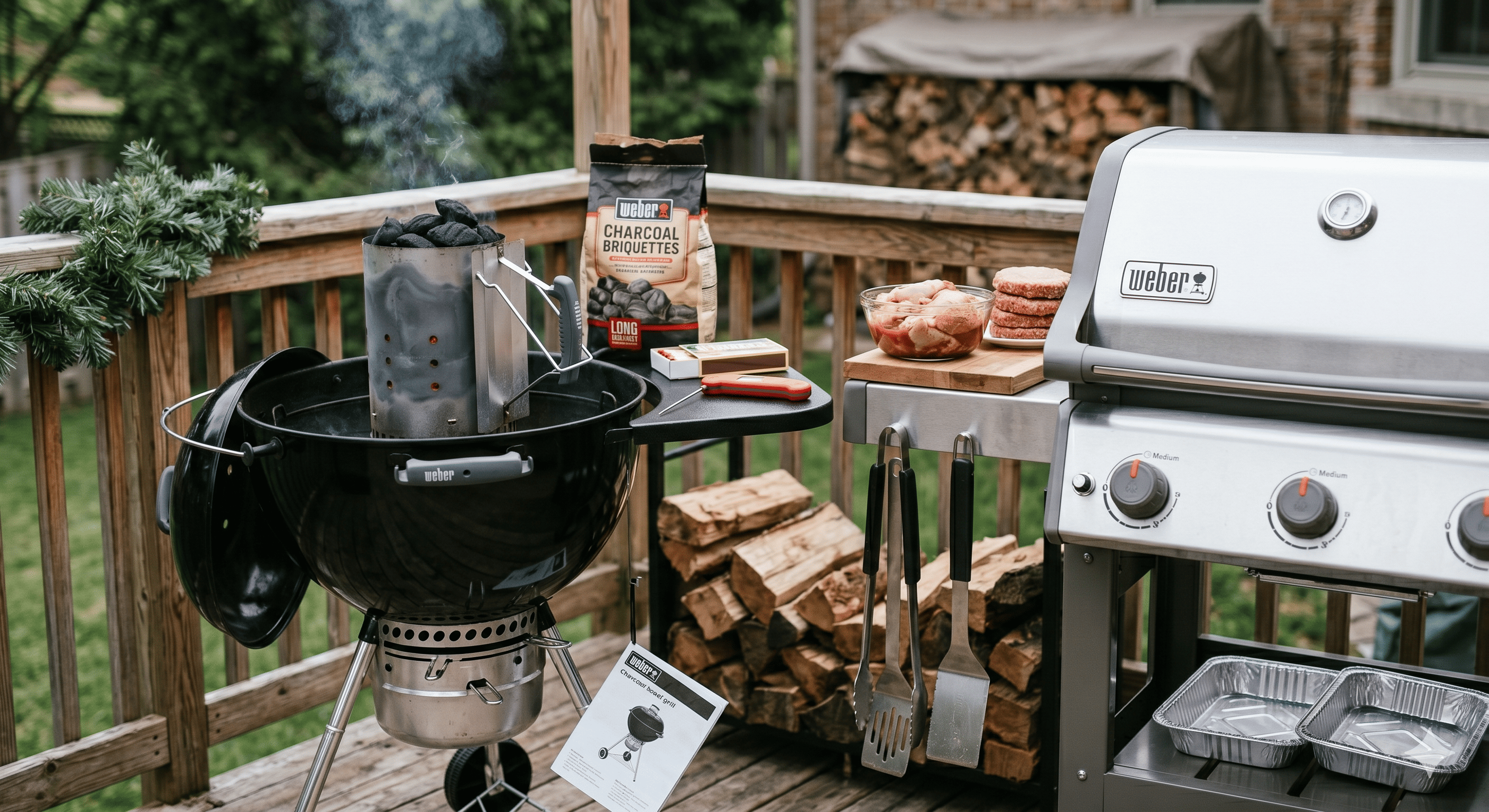
- Charcoal kettle: use the snake method or minion method to hold 225-250°F for 5-7 hours. Works well for ribs, chicken, and pork shoulder. Brisket is challenging due to capacity and duration.
- Gas grill: add a smoke box with wood chips on the burner. Produces light smoke flavor. Not as effective as a dedicated smoker, but better than nothing.
- Kamado (Kamado Joe, Big Green Egg): excellent at both grilling and smoking. Thick ceramic walls hold 225°F for 12+ hours on a single charcoal load, or sear at 700°F+. The most versatile single unit.
- Pellet grill: excellent at smoking 225-500°F, but limited at high-heat searing (most cap at 450-500°F).
Can a smoker grill? Depends on the type.
- Offset smoker: you can grill over direct heat in the firebox, but it's awkward and not the design purpose.
- Weber Smokey Mountain: designed purely for smoking, not grilling.
- Pellet grill: yes, it can grill up to 500°F (though searing is limited).
- Kamado: yes, fully capable of both.
Which One Should You Buy?
Buy a grill if: You want to cook weeknight dinners — burgers, steaks, chicken — in 15-30 minutes. Start with a gas grill ($499 Weber Spirit II) for convenience or a charcoal kettle ($149 Weber Original Kettle) for flavor. You can add smoking capability to either one later.
Buy a dedicated smoker if: You specifically want to make BBQ — ribs, brisket, pulled pork — and you've already tried smoking on a grill or know it's what you want to focus on. The Weber Smokey Mountain (charcoal, $419) is the benchmark for charcoal smokers. The Traeger Pro 575 (pellet, $699) is the easiest for beginners.
Buy a do-it-all unit (Kamado or Pellet Grill) if: You want one piece of equipment that handles both grilling and smoking well. The Kamado Joe Classic III ($1,299) does both excellently with charcoal. A pellet grill does both at 225-500°F but sacrifices high-heat searing.
The Practical Recommendation for Most People
If you're buying your first outdoor cooker and you're not sure yet: buy a good charcoal kettle.
A Weber Original Kettle Premium ($179) grills beautifully and can smoke using the snake method. It lets you cook quickly or slowly, learn fire management, and decide whether you love smoking before investing $700-1,300 in a dedicated pellet grill or kamado. Once you've decided that smoking is something you want to do regularly, upgrade from there.
Want to dig deeper into specific smokers? Read the best grills for smoking roundup. Considering a pellet grill? Start with what is a pellet grill or the Traeger vs Pit Boss comparison.
About the Author
Derek Hollis has spent the last 12 years testing grills, smokers, and outdoor cooking gear for a living — first as a backyard hobbyist who couldn't stop buying grills, then as a full-time product reviewer. He's fired up and broken down more than 150 grills across every price range. When he's not testing gear, he's hosting backyard cookouts for friends and family in Austin, Texas.