Charcoal vs Gas Grill: Which One Is Actually Better for You?
This is the most common question in grilling, and the honest answer is: it depends on what you're optimizing for. Charcoal and gas are both excellent choices — they just excel in different situations.
Here's the full comparison, category by category, so you can decide which one fits your life.
Flavor: Charcoal Wins
This is the one area where charcoal has a clear, measurable advantage. When food cooks over charcoal or wood, it picks up smoke compounds that create flavor gas simply cannot replicate. The high heat also causes more intense Maillard reaction — the browning that creates crust on a steak or char on a burger.
In blind taste tests, most people prefer charcoal-grilled food. The gap is most obvious on steaks, burgers, chicken thighs, and anything smoked. On heavily sauced or marinated foods, the difference narrows.
Gas grills have their own advantage here though: a clean, neutral heat that lets the food's natural flavor come through without any smokiness. For delicate fish or lightly seasoned vegetables, some cooks actually prefer gas.
Edge: Charcoal
Speed and Convenience: Gas Wins
Turn on a gas grill, wait 10 minutes, and you're cooking. That's it. Temperature is controlled by a dial, stays consistent without intervention, and you can turn it off instantly.
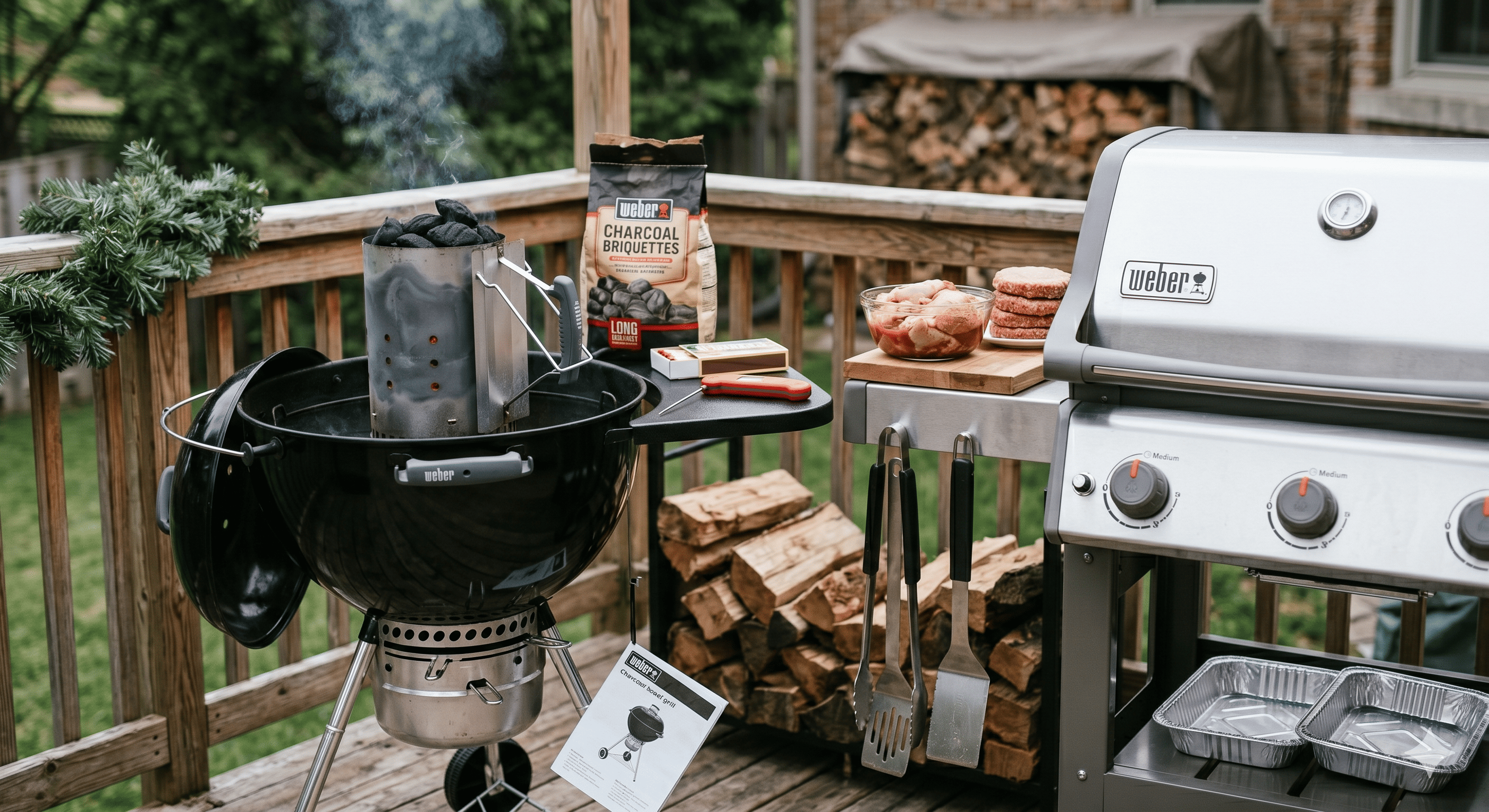
Charcoal requires lighting (a chimney starter makes this easier), 15–20 minutes to reach temperature, active management of vents to control heat, and ash cleanup at the end. It's not difficult, but it's a process.
If you want to grill on a Tuesday night after work with minimal effort, gas is the right tool.
Edge: Gas
Temperature Control: Gas Wins
Gas grills give you precise, dial-controlled temperatures across multiple independently adjustable burners. You can have one side at high heat and one at medium in seconds.
Charcoal temperature control works through airflow — adjusting the bottom and top vents changes how much oxygen feeds the fire. It's effective and genuinely capable of everything from 225°F smoking to 700°F+ searing, but it takes practice and experience to dial it in quickly.
Edge: Gas (for beginners) — Charcoal (for experienced grillers who want maximum range)
Upfront Cost: Charcoal Wins
A quality charcoal grill starts around $150 (Weber Original Kettle), and you can cook excellent food on it indefinitely. Quality gas grills typically start around $300–$400, with good mid-range options running $500+.
If budget is a concern, charcoal gets you into quality grilling for less money upfront.
Edge: Charcoal
Long-Term Fuel Cost: Gas Wins
A 20-pound propane tank runs $15–$25 and covers roughly 15–20 grilling sessions. A 20-pound bag of charcoal runs $15–20 and covers maybe 5–8 sessions depending on cook length. Natural gas connections (if available) are even cheaper to run.
Over the course of a summer of regular grilling, gas fuel costs less than charcoal.
Edge: Gas
Smoking and Low-and-Slow Cooking: Charcoal Wins
If you want to smoke a brisket for 12 hours or hold ribs at 250°F for six hours, charcoal is the better platform. You can add wood chunks directly to charcoal for genuine smoke flavor, and kettle grills with the right setup (or a dedicated charcoal smoker) give you precise low-heat control.
Gas grills can accommodate smoking with a smoke box and wood chips, but the smoke flavor is noticeably milder. For occasional smoking, gas works fine. For serious smoking, charcoal or a dedicated smoker is the better tool.
Edge: Charcoal
Cleanup: Gas Wins
After a gas cook, you clean the grates, empty the drip tray, and you're done. After a charcoal cook, you do all of that plus wait for the coals to cool completely, then dispose of the ash. If you cook frequently, that extra step adds up.
Edge: Gas
Which One Should You Buy?
Buy charcoal if:
- Flavor is your top priority
- You enjoy the ritual of fire management and aren't in a hurry
- You want to experiment with smoking and low-and-slow cooking
- You're working with a tighter budget
- You grill mostly on weekends
Buy gas if:
- You want to grill on weeknights without a long setup
- Convenience and speed matter more than maximum flavor
- You have multiple burners in mind for different cooking zones
- You host regularly and need reliable, consistent results
Buy both if: Many serious grillers eventually end up with one of each — a gas grill for weeknight convenience and a charcoal kettle or smoker for weekend projects. It's not as extravagant as it sounds; a quality charcoal kettle costs $150–$180 and takes minimal space.
Need help deciding on a specific model? Read our guide on how to choose a grill, or see our picks for the best grills for beginners. If you're cooking for a group, check out the best BBQ grills for hosting friends.
About the Author
Derek Hollis has spent the last 12 years testing grills, smokers, and outdoor cooking gear for a living — first as a backyard hobbyist who couldn't stop buying grills, then as a full-time product reviewer. He's fired up and broken down more than 150 grills across every price range. When he's not testing gear, he's hosting backyard cookouts for friends and family in Austin, Texas.